
This is an old tale from the North East of England. It’s a legendary story passed down through oral tradition for hundreds of years. It doesn’t have a specific date, but the story is believed to be over 700 years old.
And before we begin our story, I should probably tell you that in olden times, the word ‘worm’ didn’t mean the pink wiggly chap you put on the end of your fishing hook. The villagers called it a ‘worm’ because ‘monstrous dragon without any arms and legs, that eats everything in its path’ took too long to shout, when it appeared.
One fine Sunday morning, in the bonny hills of County Durham, a restless teenager named John Lambton, heir to Lambton Hall was up to no good. While everyone else in the village made their way to Brugeford Chapel, John decided to skip mass and try his luck fishing. Armed with his rod and catch basket, he set off toward the River Wear, dreaming of landing a monstrous fish.
Hours passed, and John hadn’t caught a thing. Just as he was about to give up, his line tugged violently. His heart pounded as he reeled in his catch, imagining a prize fish worthy of a feast. But what emerged from the water wasn’t a fish – it was a slimy, wriggling eel-like thing, unlike anything John had ever seen. Now John wasn’t easily startled, but even he couldn’t help but do a double-take at the curious creature.
It was black as coal, with glowing yellow eyes that seemed to stare right into his soul, and a mouth full of needle-sharp teeth. It hissed as it twisted and coiled with unnatural strength, spitting sticky slime everywhere.
“You look like something sneezed out of the Devil’s nose!” John muttered to himself.
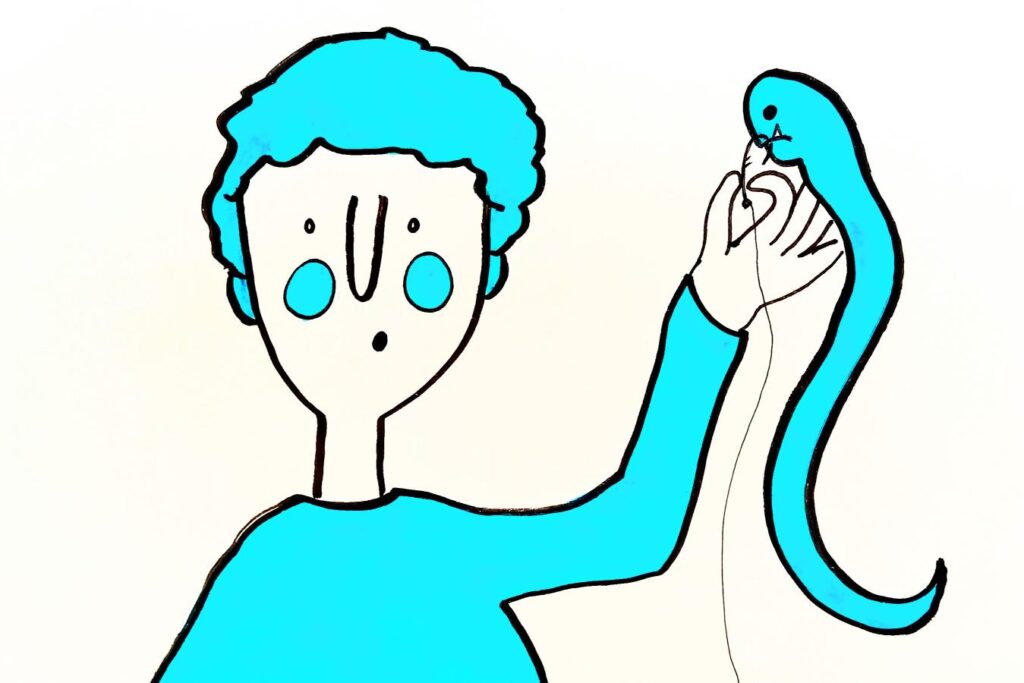
As John stared at the wriggling black creature, a chill ran down his spine, as if the very air had grown heavier. From the shadow of an ancient oak, an old man emerged, his cloak tattered but his bearing oddly regal. His eyes, sharp as a hawk’s, making him feel as if he were in the presence of someone from another world.
The old man gazed at the creature in John’s hands and drew a deep, shuddering breath. “You’ve hooked more than a fish today, boy,” he said, his voice low and steady. He made the sign of the cross over himself, his weathered hand trembling slightly, as if he knew more than he was letting on.
“What… what is it?” John stammered, unnerved by both the man and the strange thing in his hands.
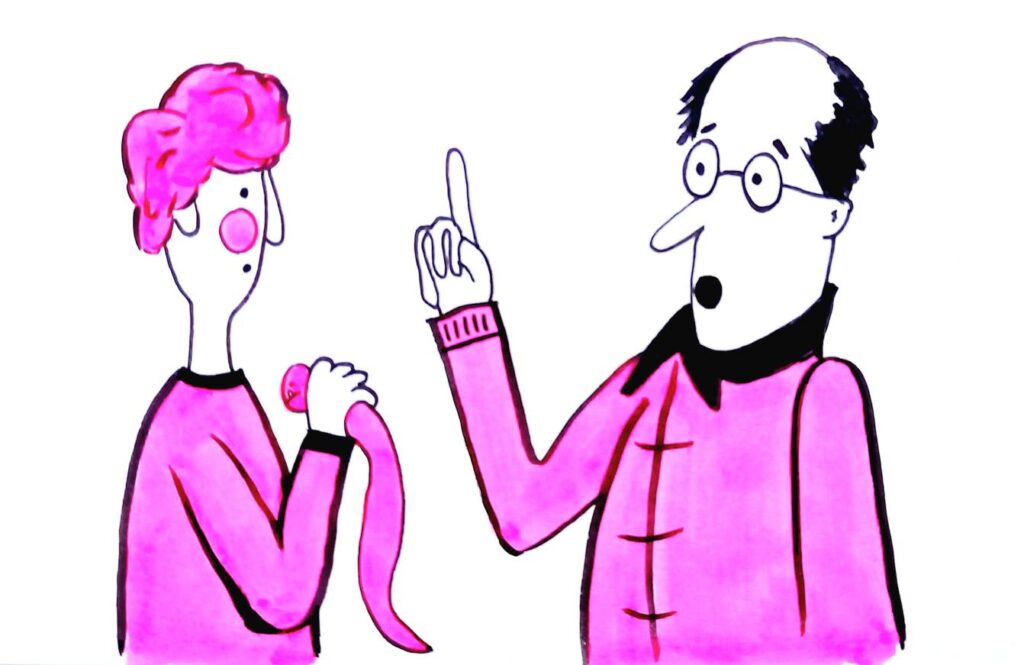
The old man leaned closer, his expression grave. “That, my lad, is no earthly creature. You’ve seen the devil’s face today, though he wears the guise of a worm. Mark my words – do not throw it back into the river, lest you unleash a darkness you cannot control.”
Before John could ask anything more, the old man turned and walked away, his steps silent despite the crisp leaves and twigs on the ground. A blink later, he was gone, as though he had never been there, leaving John to wonder if it was all just a trick of his imagination.
John put the strange creature into his catch basket, his mind racing with the old man’s words. He started to make his way back to the hall. Along the way, he passes an old stone well that had become so overgrown, it was hard to tell where the nettles stopped and the masonry began.
With the warning still echoing in his thoughts, John reaches into his basket, plucks the creature out and with a flick of his wrist, he sends it tumbling down the deep, dark well.
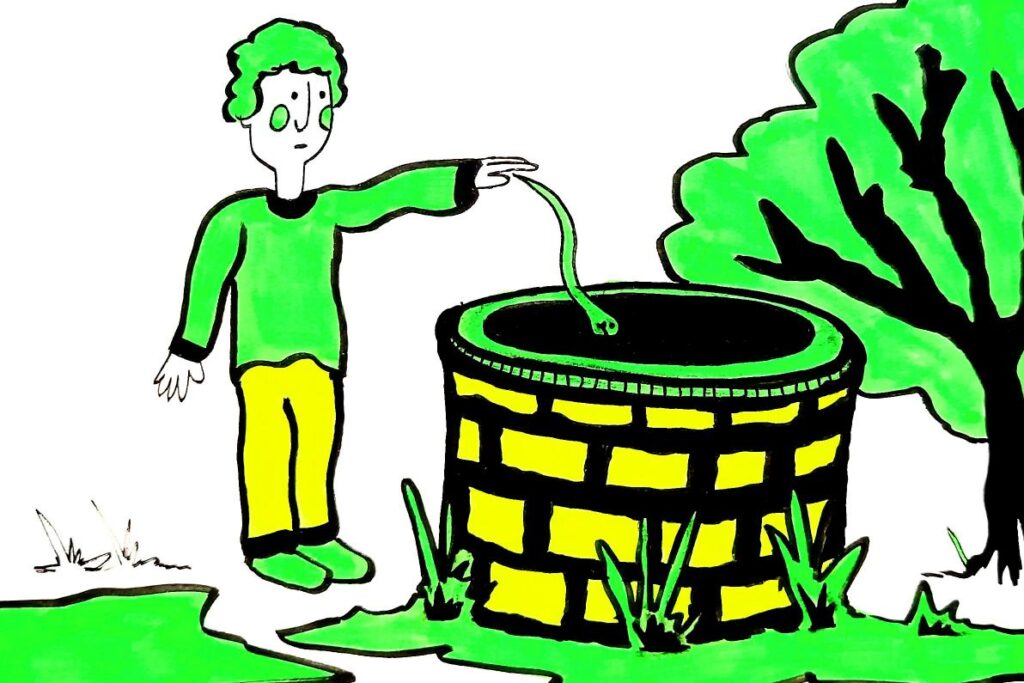
The splash echoed ominously, louder than seemed possible, and for a moment, John thought he heard a faint, low hiss rising from the depths. And in protest of the new arrival, the three frogs living in the well, moved out immediately.
He hurried home to Lambton Hall, thinking he’d left the strange encounter behind. But as he walked, he couldn’t shake off the feeling that he’d somehow set something in motion.
The Beast Awakens
The years rolled on, and John Lambton left the village behind, joining the Crusades in search of adventure. But while John battled distant foes, a more sinister force was growing in the shadows of Lambton Hall.
The creature he had cast into the ancient well did not remain small. The local children were warned not to play near the well, which of course meant they did. So, in the cold, dark depths, the worm feasted on sweet wrappers, broken toys, and the occasional lost shoe – along with any unfortunate animal that happened to fall in, twisting and growing into something monstrous.
The villagers whispered of strange sights and sounds. The well became unusable, its water turning black and vile. At night, eerie vapours coiled from its depths, glowing faintly in the moonlight with a stench of decay. Those brave enough to peer into the well swore they saw glowing yellow eyes far below, watching, waiting.
Then, one foggy morning, when the sky was grey, the villagers heard a sound that made their blood curdle. With an enormous rumble, up from the depths of the well, out slithered the beast!
By morning, the beast had claimed its lair – Penshaw Hill.
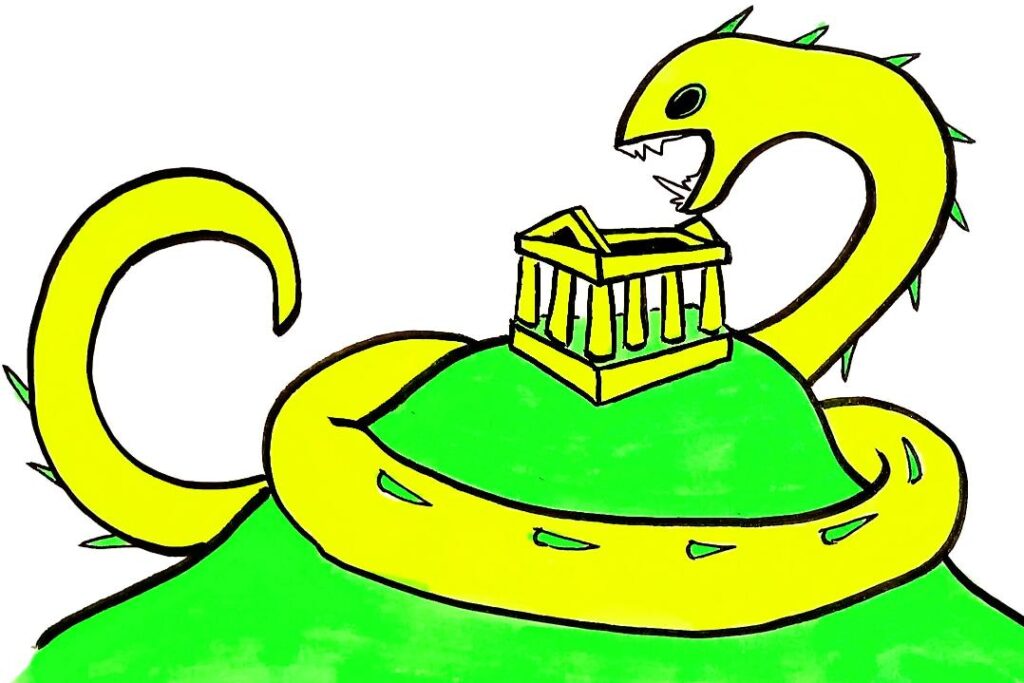
It coiled itself around the peak, its scaled body gleaming like dark armour in the first light of dawn. Its massive head rested near the summit, a gaping mouth filled with razor-sharp teeth, each as long as a dagger. From its nostrils, foul vapours drifted down the hill, leaving the grass and plants withered, blackened and burnt.
The villagers, now terrified, avoided the hill at all costs. But fear turned to horror when the worm began to stir at night. It slithered silently through the countryside, hunting under the cover of darkness. At first, it preyed on lambs and sheep, swallowing them whole with one horrific gulp – their woolly bleats echoing through the hills.
But its hunger grew insatiable – feasting on anything in its path that couldn’t run away fast enough. Soon it began tearing open cows with its claws to lap up their milk, which it could smell from miles away.
And then it grew even bolder.
One night, a farmer returned to his house to find his child’s bed empty, the window left ajar. The trail of black slime leading away from the house told a chilling tale. After that, every home locked its windows and doors tight at night.
By now, the worm’s boldness knew no bounds. It would slither through the village streets, its body scraping against the cobblestones, leaving a trail of slime that would harden like tar by morning. The villagers learned to recognise the sound of its approach – a deep, rumbling slither that vibrated through the ground, a warning of its presence long before it was seen.
The children weren’t even allowed to play their games in the streets and fields during the day. Instead, they huddled inside, whispering tales of “the Lambton worm” as a way to scare each other, though the reality was far more terrifying than any story from their imaginations.
Even the village dogs whimpered and hid whenever the worm was near. Cats vanished from sight, and the birds fell silent, as if all of nature knew to keep its distance from this abomination. The worm’s hunger grew and grew. No longer content with livestock, or even small children, the beast began to eye the villagers themselves, with those enormous glowing yellow eyes.
The Beast Attacks Lambton Hall
As the worm’s rampage continued, desperate villagers attempted to fight it. Armed with pitchforks, axes, and swords, they faced the creature, only to be crushed beneath its enormous coils or shredded by its needle-sharp teeth. No weapon could pierce its scales, and no courage could outmatch its strength. The beast seemed invincible.
Eventually, the worm turned its attention to Lambton Hall. It slithered up the lane to the gates, drawn by the scent of the finest livestock in the region. The lord of the hall, living alone in his ancestral home, feared that the creature would destroy everything in its path. The villagers rallied to his aid, determined to protect the hall from the monster, their unity born from desperation.
And together they hatched a desperate plan. The villagers prepared a massive stone trough and filled it to the brim with warm milk from the lord’s finest cows. The smell of the milk wafted through the air, and soon, the worm arrived. Its massive head loomed over the trough, nostrils flaring. With a deep hiss, it plunged its mouth into the milk, draining the trough dry in moments, its eyes rolling back in what could only be described as the worm equivalent of ecstasy.
Satisfied, the worm slithered back to Penshaw Hill, coiling itself around the summit once more. From that night forward, a truce of sorts was struck. Each day, the villagers would fill the trough with fresh milk, and the worm would spare their livestock and children.
The milk tribute was a daily reminder of their dangerous situation. And of course, it resulted in a milk shortage in the village. The price of a pint of milk sky-rocketed and a watered down bottles of milk were traded like silver and gold. Of course, many historians believe this was how skimmed milk was invented!
The beast left a glistening trail of black slime as it travelled to and from the hall, and this trail became a path, avoided by all who valued their lives. The villagers, while relieved, lived in constant dread.
Children would play games where one would pretend to be the worm, devouring everything in its path, while others would act as the villagers, trying to escape or appease the monster. But these games were played with an edge of fear, knowing that the real worm was never far away, and meaner than a teacher on Monday morning!
Seven Years of Terror
For seven long years, the worm held the village in its grip. Life became a grim routine: tend the farms by day, hide behind locked doors by night, and prepare the milk offering without fail. In fact, they became the first village in England to have more milk-men than blacksmiths!
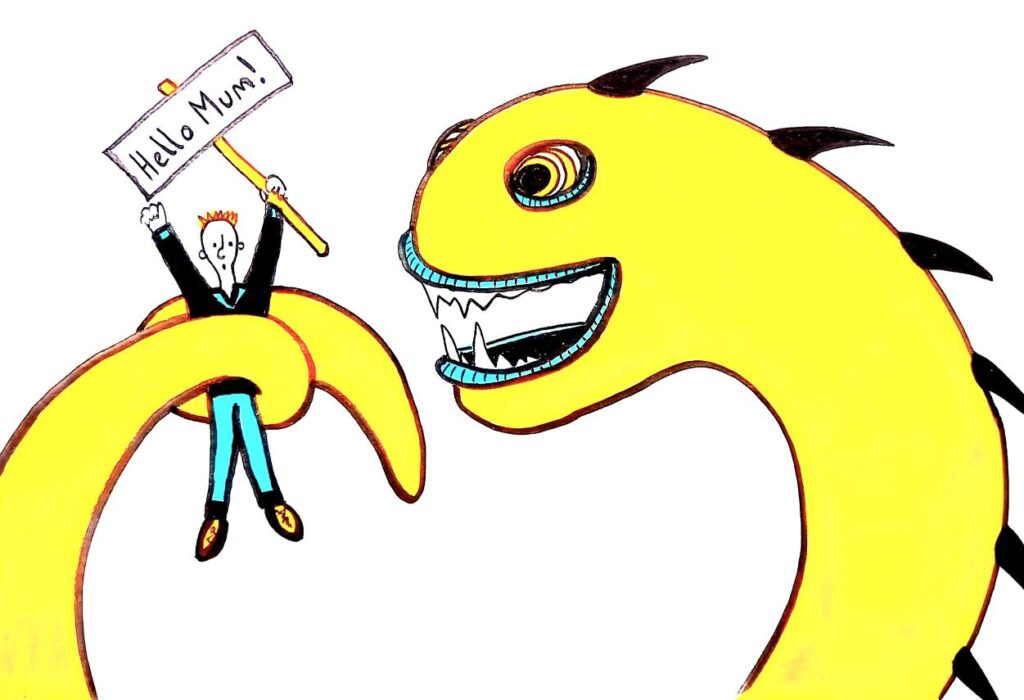
Though some brave souls came from far and wide to challenge the beast, every one of them met the same gruesome fate – crushed, drowned, or torn to shreds. Even the Council’s sternly worded letter to the worm had no impact. The villagers resigned themselves to their fate, praying for a saviour who might one day end their suffering.
The village transformed under the shadow of the worm. Celebrations dwindled, and the once-lively market days turned into quick, silent exchanges where people kept one eye on the sky, watching for the first sign of dusk when the worm would be on the move. The laughter of children was rare, replaced by whispers of caution and sharing tips on how to avoid the beast’s path.
Every night, the villagers would hear the worm’s slithering, a sound that haunted their dreams, making sleep a luxury few could afford.
But in their darkest hour, hope stirred on the horizon. After years of battle abroad, John Lambton was finally returning home. Little did he know, the creature he had cast away in his youth was waiting for him, now grown into a monster that would test his strength, courage and character.
The Return of the Hero
After seven years had passed, John Lambton returned from the crusades a powerful and seasoned knight. He found his home in ruins and his people living in fear. The stories of the worm, which had become legend beyond the village, now confronted him as a stark reality.
As he listened to the villagers recount their tales of terror, a chilling realisation dawned upon him. The descriptions of the beast, with its glowing yellow eyes and its black, slimy body, echoed back to that fateful day by the river. The worm that had terrorised the village was none other than the creature he had thrown down the well in his youth. Racked with guilt, he vowed to make things right – he would end the nightmare he had unwittingly set in motion.
Seeking advice, he visited the wise woman, an old crone known for her cryptic wisdom. She lived on the outskirts of Brugeford, in a small cottage surrounded by herbs and strange symbols etched into the wood, a place you could almost feel the magic in the air. The door was ajar and John slowly pushed it open, as it creaked louder than Grandpa’s knees on a cold winters morning.
The door opened, revealing the wise woman herself. She was a sight to behold, with hair as wild as a haystack and eyes that sparkled like a thousand Christmas lights. She wore a cloak made of patchwork quilts and a hat that looked suspiciously like a teapot.
The cottage was filled with jars of mysterious potions, and shelves of ancient books. “This is your doing, John Lambton,” she said, her voice like the rustle of dry leaves. “Yes, ma’am,” John replied, “and I need your help to stop it.”
The wise woman nodded sagely, while stirring a pot of something that bubbled and burped on the stove. “To defeat the Lambton Worm,” she said, “you’ll need more than just courage and a sturdy pair of boots. You’ll need a suit of armour covered in spearheads.”
John blinked in surprise. “Spearheads, you say?”
“Indeed,” she replied, wagging her finger for emphasis. “Have your suit of armour forged with the sharpest spearheads you can find, and wear it when you face the beast. But beware! There’s one more thing you must do.”
John leaned in, his ears twitching with curiosity. “What’s that?”
The wise woman’s face grew serious, and she leaned closer, her breath smelling faintly of peppermint and roast beef. “After you slay the worm, you must kill the first living thing that crosses your path, or for nine generations, no Lambton men will die peacefully in their beds!”
John listened, his heart heavy with the weight of his past actions. “I understand. Thank you, wise woman. I’ll follow your advice and end this nightmare once and for all.”
With that, he left the cottage, his heart pounding and his mind racing.
He went straight to the blacksmith, who, upon hearing the tale, forged a fearsome suit of spiked armour with blades that gleamed menacingly in the forge’s hot flames. It was armour not just for protection but for vengeance against the creature he had unwittingly unleashed.
John’s mind was awash with thoughts of redemption, of the friends and family he had left behind, and of the innocent lives lost because of his youthful mistake. This was his chance to face not just the worm but the consequences of his actions.
The Battle at Sunset
The sun dipped low on the horizon, painting the sky with streaks of red and gold, as the monstrous worm began to stir. For hours, it had slumbered in its place, coiled tightly around the hill.
But now, as the sun began to set and the first stars pricked the heavens, the beast uncoiled itself, its enormous body rippling and glistening in the moonlight. It moved with grace, slithering down the hill toward the River Wear, where it would drink deeply before beginning its nightly rampage.
But this night would be different. John Lambton, clad in the his spiked armour, waited at the riverbank. He had studied the beast for days, watching its habits and learning its weaknesses. His years at war had taught him that the high ground was a deadly advantage for any opponent. If he attacked on the Penshaw Hill, he would surely lose. Here, by the river, where the worm was distracted by its thirst, it was most vulnerable. Here, John would make his stand.
John gripped his sword tightly, its blade catching the faint glow of the dying light. His breath was steady, his determination firm. As the beast neared, lowering its massive head to the water’s edge, John stepped forward, his voice echoing across the valley like a challenge, “Come and get me, you oversized earthworm!”
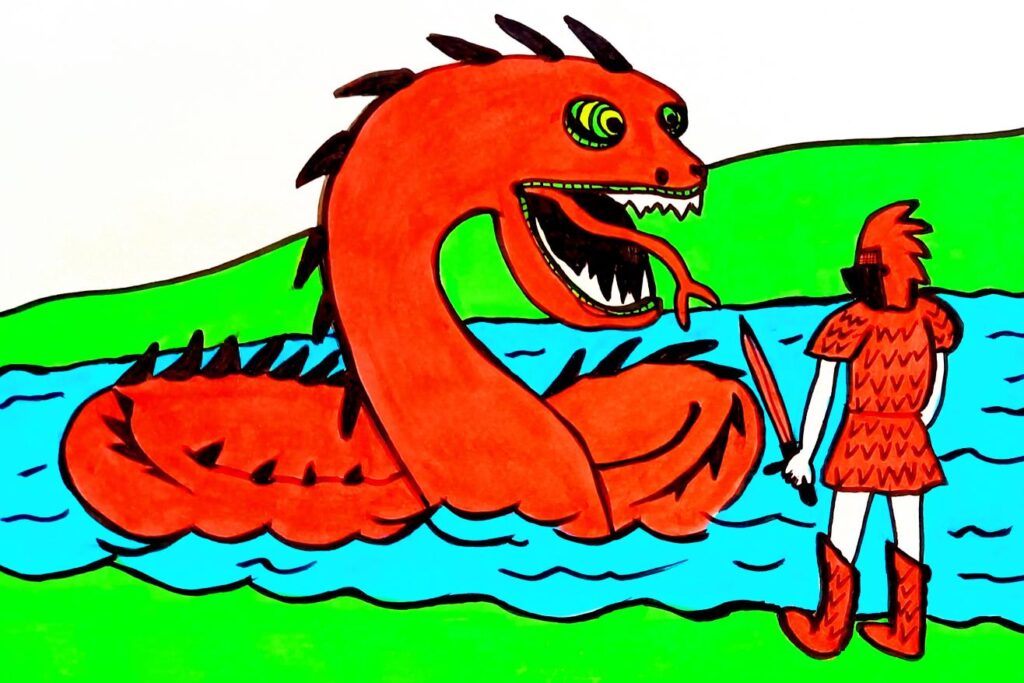
The worm’s head snapped up, its glowing yellow eyes locking onto John. It let out a hiss that rumbled like thunder, and venomous vapours curled from its gaping mouth. Without hesitation, it lunged, its massive jaws snapping shut mere inches from John, who rolled to the side, the spikes on his armour glinting as he moved.
The creature coiled back, preparing to strike again, but as it lunged, John swung his sword in a wide arc. The blade sliced into the worm’s side, cutting deep, and a torrent of dark, steaming blood sprayed into the air. The beast recoiled with a roar that shook the ground, thrashing its tail and sending waves crashing against the riverbank.
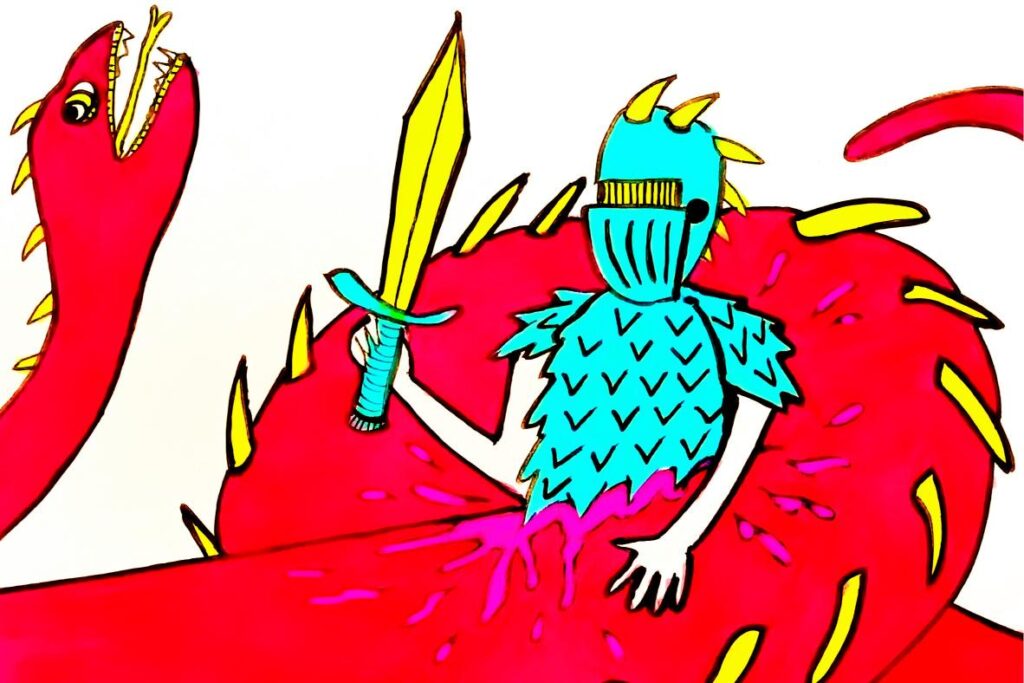
However, the worm was relentless, and this time it struck quickly. It trapped John, wrapping its muscular body around him. For a moment, it seemed all was lost, as the beast tightened its grip, squeezing John like a tube of toothpaste.
But the spikes on John’s armour did their job, tearing into the monsters flesh with every squeeze. The giant worm howled in pain, its grip loosening as John twisted free.
The battle raged on, each clash more ferocious than the last. The worm lashed out with its tail, nearly knocking John into the river. He staggered but kept his balance, just in time to dodge another snap of its jaws. The ground beneath them turned to mud, slick with blood and water.
John fought with the strength of someone who knew the lives of his family and friends depended on him. His armour, though heavy, was his shield against the creature’s crushing coils. Again and again, he struck with his sword, each blow finding its mark. But the worm was relentless, its size and power threatening to overwhelm him.
As the sky darkened to indigo and the stars grew brighter, John saw his opportunity. The worm, weakened and bleeding from dozens of wounds, reared up for one final attack. Its massive head loomed above him, jaws open wide, ready to strike.
With a shout that shook the very earth and echoed through the valley, John leapt forward, with one mighty blow, John sliced the worm in two. The worm let out a final, ear-splitting roar, before collapsing into the river, its lifeless body sinking beneath the water with a gurgle and a splash.
John, panting and covered in slime, stepped back. For a moment, all was still, except for the sound of the river and John’s pounding heart.
There, on the blood-soaked riverbank, John stood victorious but weary. He raised his sword high in triumph. The beast was dead, its reign of terror finally over. But even as he celebrated, he knew the hardest part might still be ahead.
The Broken Vow
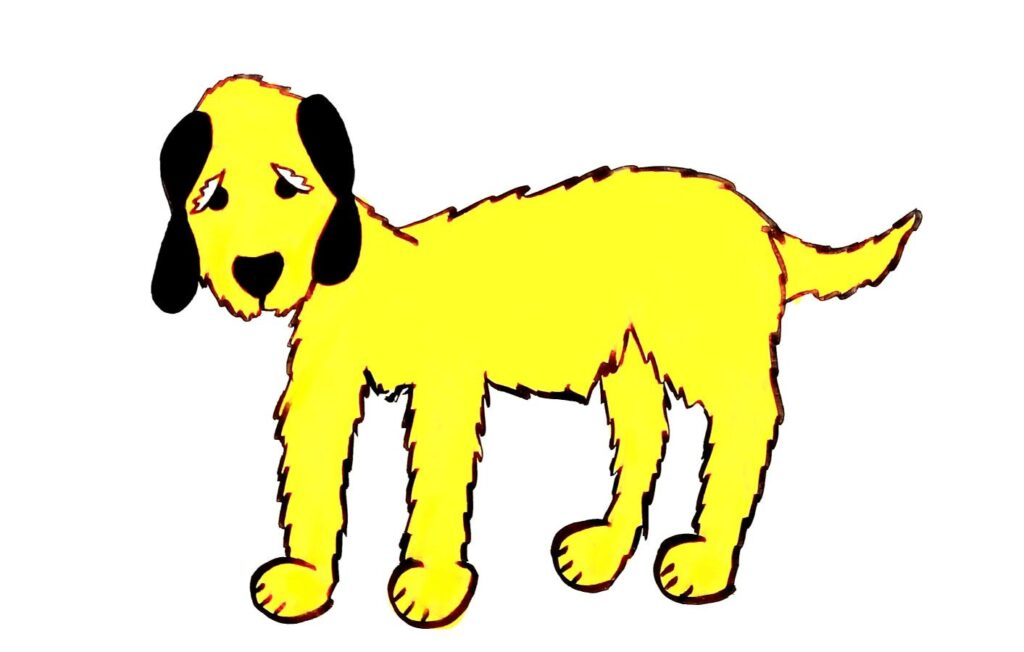
John drew his horn and sounded three clear blasts, the agreed signal for his father to release his old hunting hound, Duke. The dog, a faithful companion in its prime, was now aged and frail. Living in constant pain and knowing its life was nearing its natural end, this was the animal chosen by John and his father to prevent the curse.
With his sword still clutched in his bloodied hand, John began the long walk back to Lambton Hall, ready to complete the grim task. But as he crossed the threshold, the first figure to rush out was not Duke – it was his father, his face beaming with pride and relief.
John froze, his heart sinking. He knew instantly that the vow had been broken. He could never harm his father, no matter the cost. The weight of the wise woman’s prophecy pressed heavily on him, but John stood tall. He embraced his father, knowing the curse had already taken hold.
John’s father, realising too late what his joy had cost, stepped back with a shadow of guilt clouding his expression.
“Let it be,” John murmured, his voice steady but resigned.
In the years that followed, Robert Lambton died in battle, as did Sir William Lambton, who was a colonel in the Royalist Army during the English Civil War. Henry Lambton drowned in the River Wear, and General John Lambton died in an accident while serving in the military.
The list went on and on for nine generations. It is said that the ninth Lambton descendant died while crossing over Brugeford Bridge over a hundred and fifty years ago.
But the tale of his courage and sacrifice lived on. It became a story of strength, of facing life’s curses with bravery, and of choosing love, even when the cost was great.
However, we will end this story with some precautionary words. Yes, the Lambton Worm is gone – sliced and diced, to the bottom of the River Wear, but let us not grow complacent. You see, if such a beast could emerge once, who’s to say there aren’t other wriggly terrors lurking out there somewhere. And you never know when the next monster might decide to slither out of the shadows!