This painting began where many of my creative journeys do – with a wander through the charity shops of Whitley Bay. I was on the hunt for inspiration, specifically in the form of a book: something unloved, a bit battered, ideally with a bit of character and history. After more than an hour of rummaging, I found myself in Farplace Animal Rescue, lingering in the travel section, when a slightly torn, timeworn book about Geisha girls caught my eye.
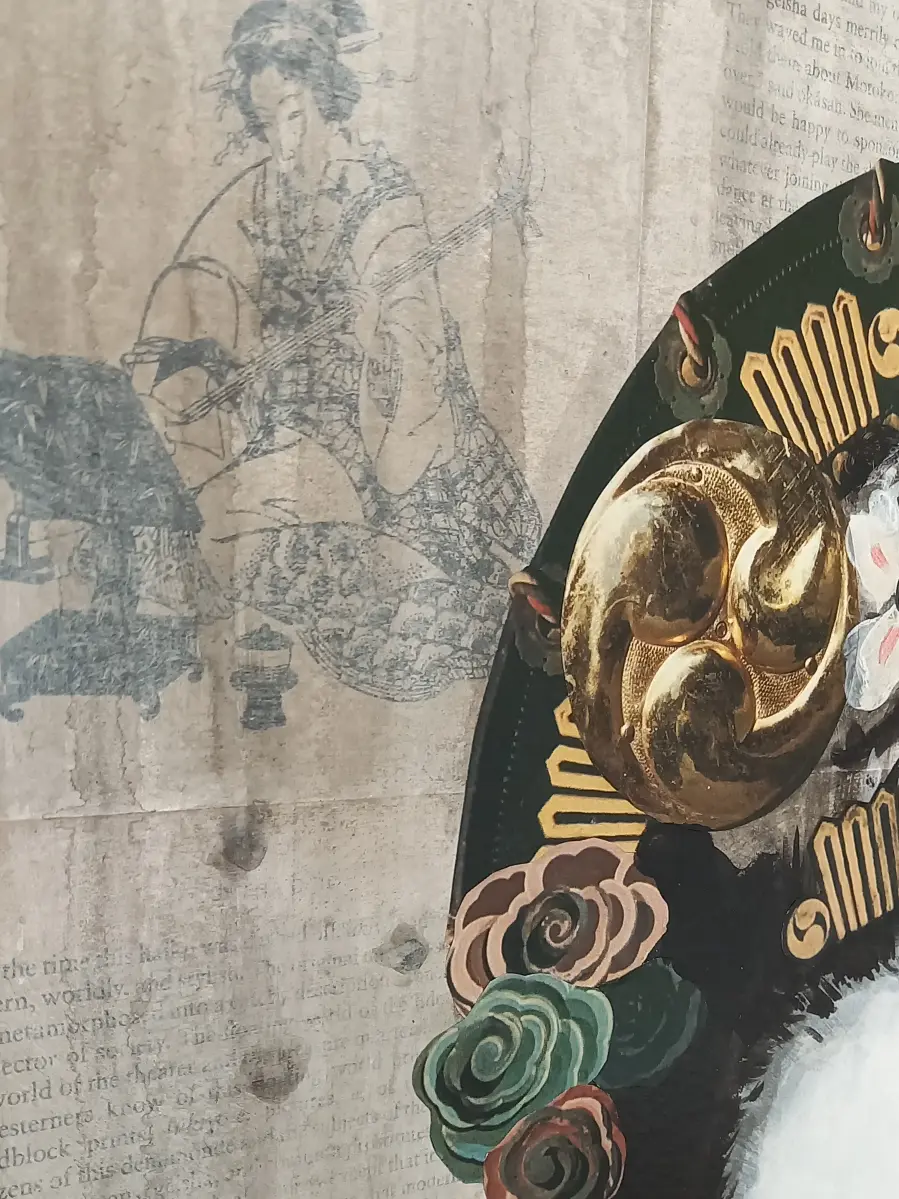
Its spine was creased, the cover frayed – it looked like the sort of book that had been sitting on the shelf for years, passed over again and again. It was perfect. I brought it home, and to my delight, discovered that every twenty pages or so there was a delicate black-and-white illustration of a traditional Japanese Geisha. That was the moment the idea clicked into place: I’d use the pages of this forgotten book as the foundation for a new artwork – something contemporary, layered, and alive.
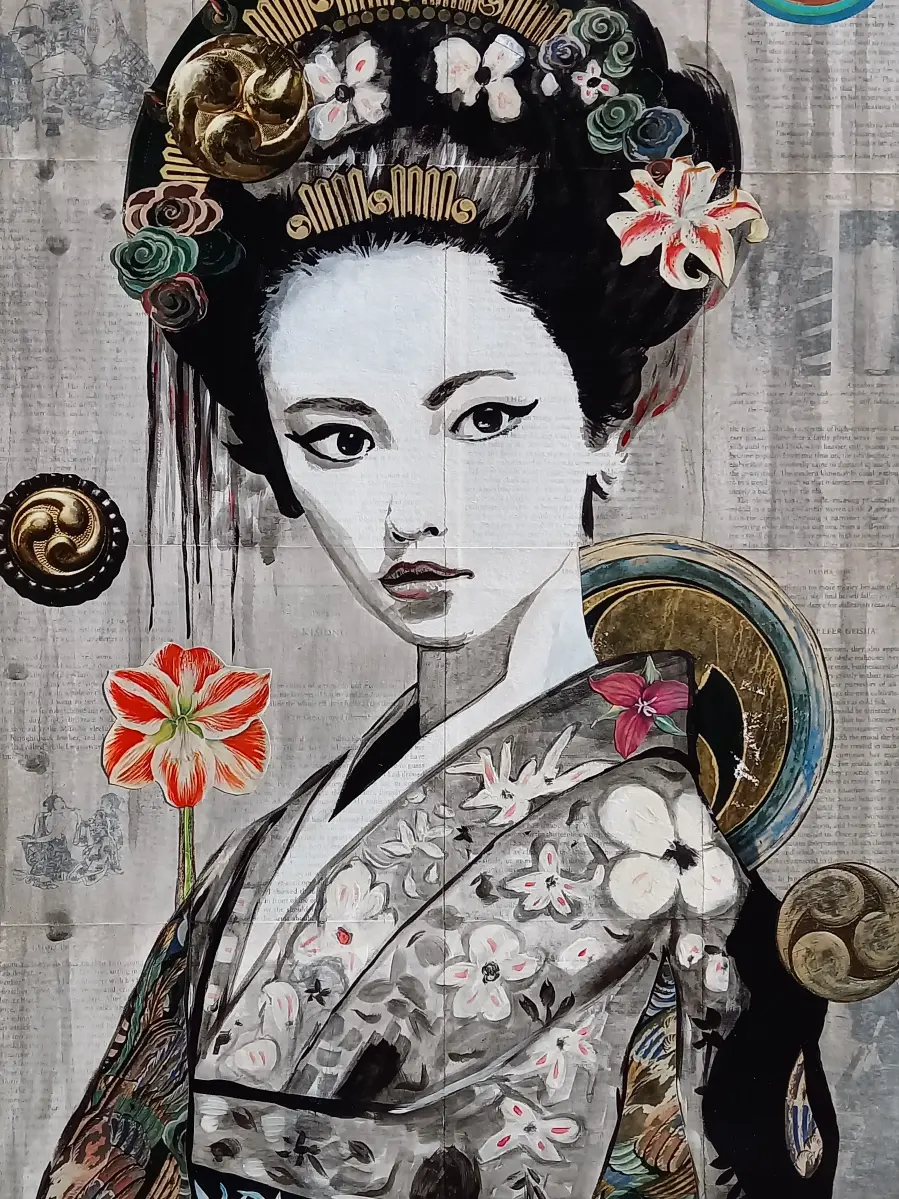
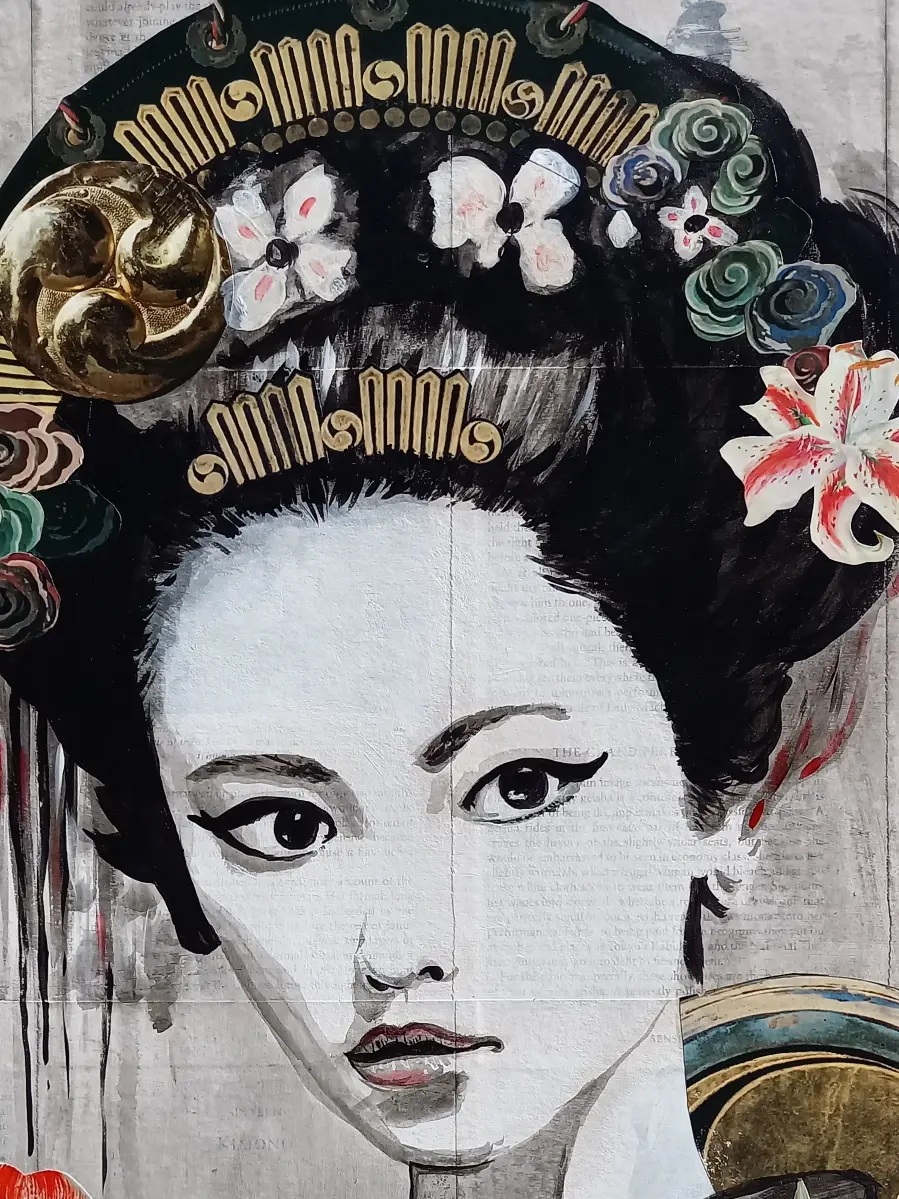
I began by pasting the book pages over an old canvas I was planning to upcycle – covering up a generic print to make way for something new. Once the pages were dry, I gave them a gentle whitewash to push the illustrations into the background, creating a subtle textured surface. It was about honouring the past, but not being confined by it – letting the old world quietly speak beneath the new.
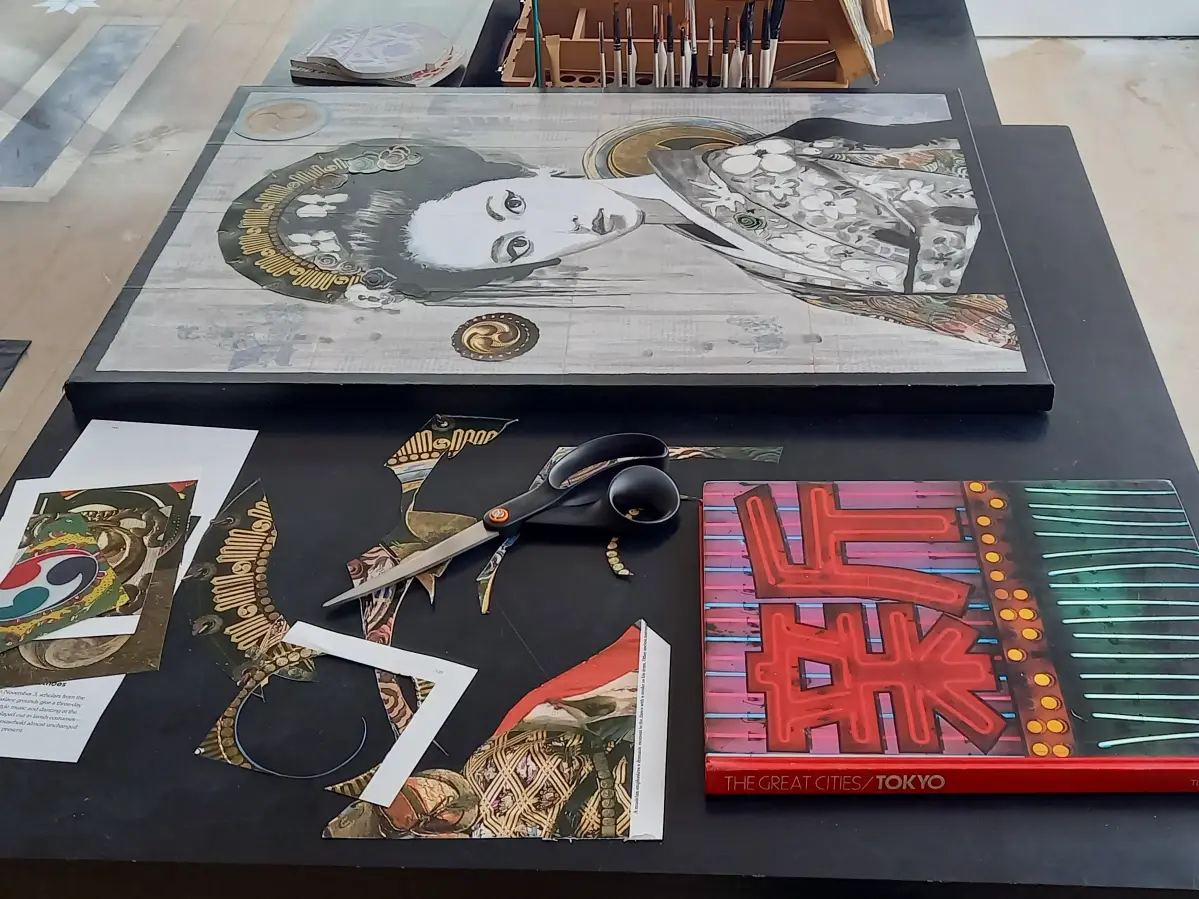
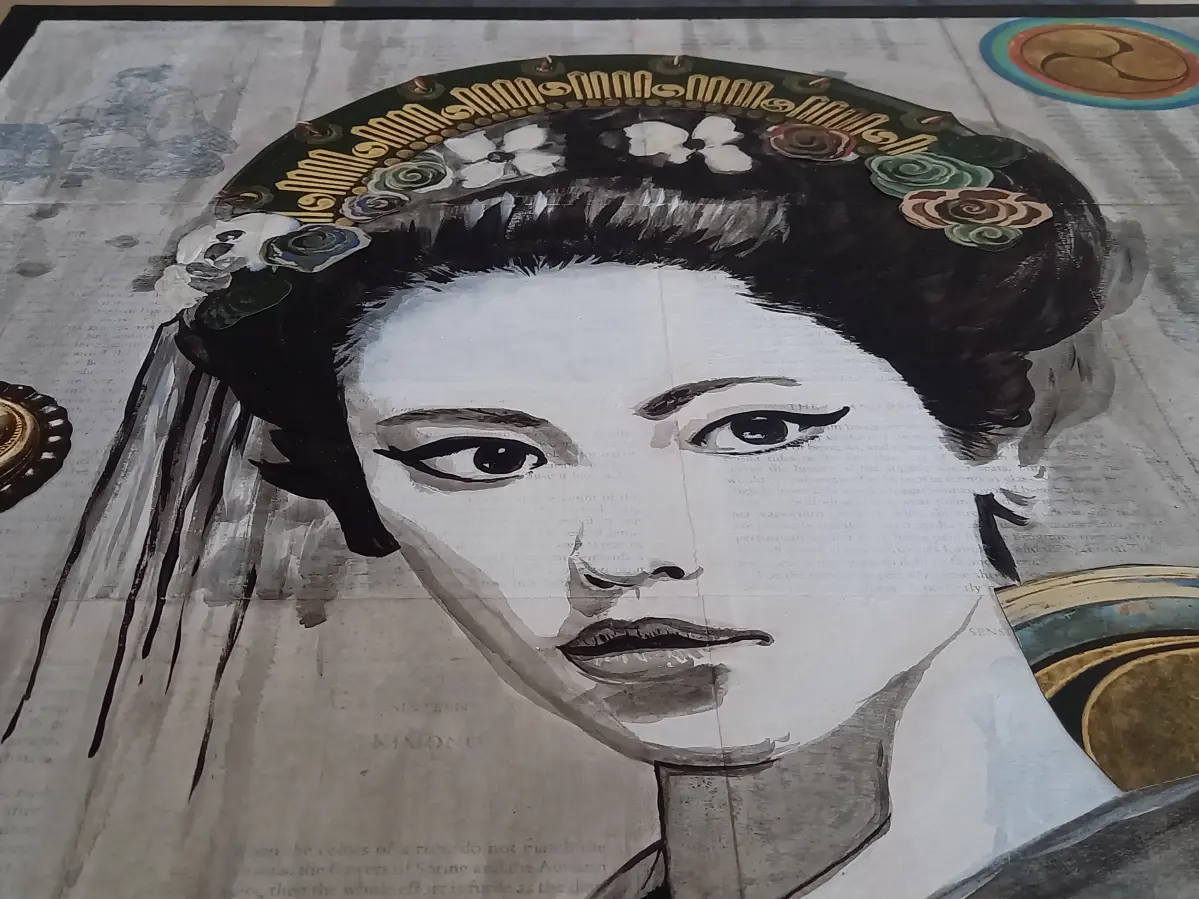
To anchor the painting in the present, I turned to an AI-generated image of a Geisha that caught my attention. There was something both traditional and otherworldly about it – a tension that felt right. My first instinct was to keep the piece in black and white, mirroring the book’s original drawings. The result was crisp and elegant, but something about it felt a little cold, a little too restrained.
That’s when Tokyo entered the picture – quite literally. Flicking through some magazines, I found a spread about the city, full of colour, energy, and fragments of urban life. I began cutting and arranging, working intuitively, laying pieces over the canvas to see what belonged. My approach to collage is instinctive: if it makes the painting better, it stays. If it doesn’t, it goes back in the pile.
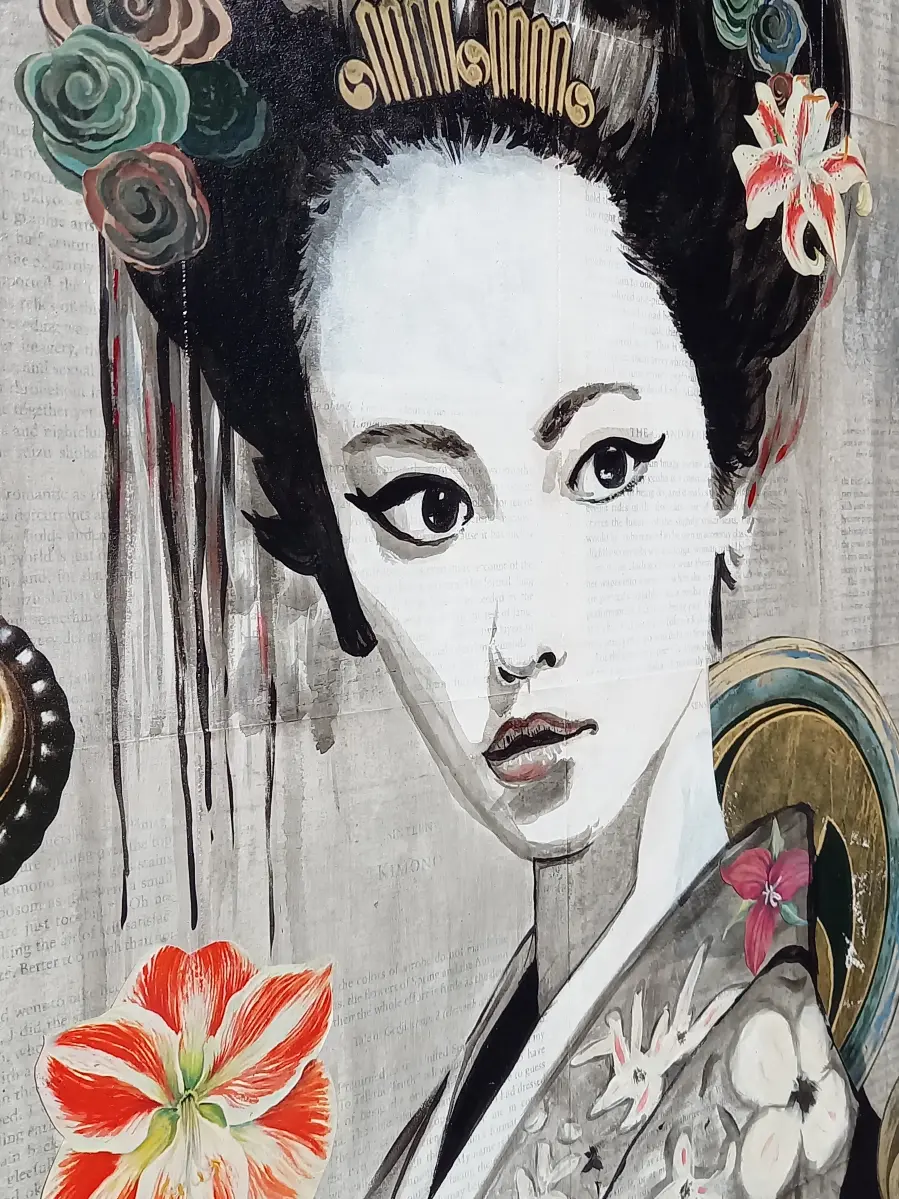
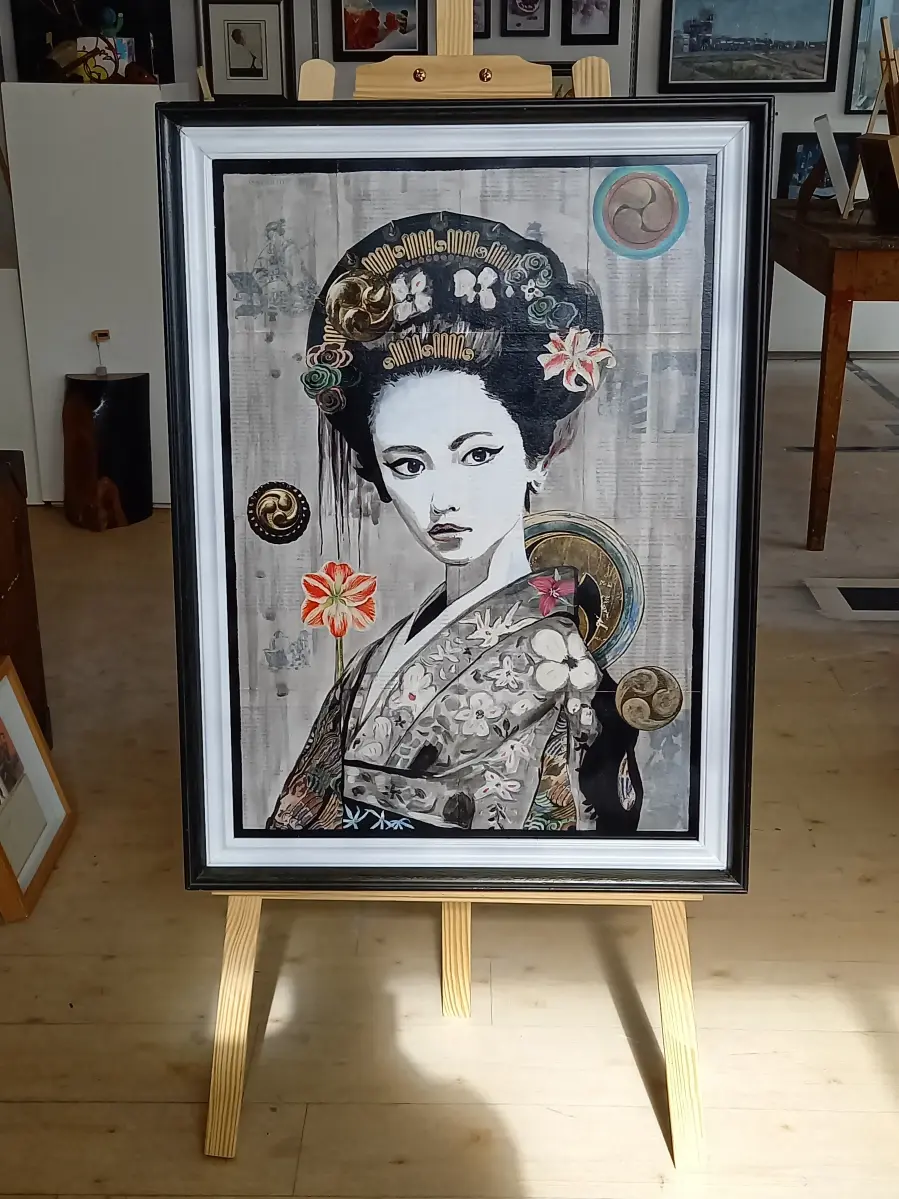
Once I’d found a composition that worked – combining clippings from the Tokyo article with vibrant touches of red paint and floral images from an old book – I glued everything down and sealed the piece with a varnish. The final touch was the frame: a solid wood find from another charity shop. A bit rubbed and worn, but beautifully made. With a fresh coat of paint, it felt like the perfect home for this new-old fusion.
This piece is, at its heart, about contrasts: old and new, traditional and modern, restrained and expressive. It’s a love letter to second chances – to the books, frames, and images that might otherwise be forgotten, and to the stories they can still tell.